
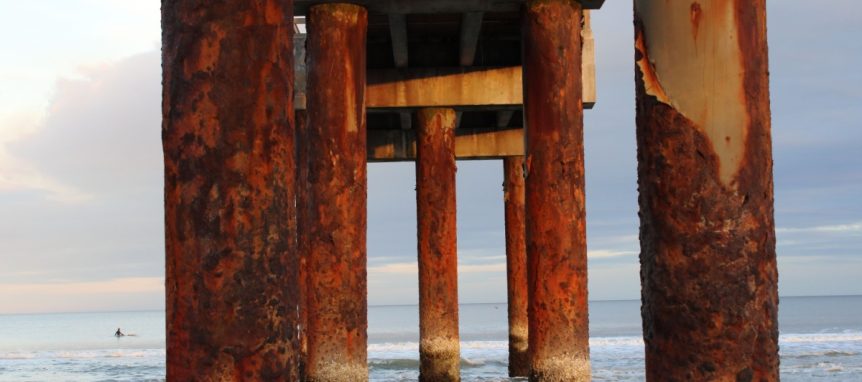
Florida’s climate is undeniably beautiful, but for building materials and industrial equipment, it’s a harsh and unforgiving environment. Rust and corrosion aren’t just seasonal problems here, they’re accelerated by a unique blend of heat, humidity, and salt exposure. Understanding the chemistry behind corrosion helps explain why some materials deteriorate faster in Florida and why proper rust prevention strategies are essential for businesses operating in this region.
What Is Corrosion and How Does It Work?
Corrosion is a chemical reaction that occurs when metals react with elements in their environment, particularly oxygen and moisture. In the case of iron and steel, this reaction produces iron oxide, commonly known as rust. The process is electrochemical: when metal comes into contact with water (which often contains dissolved salts or pollutants), an electrochemical cell is formed, and electrons begin to move. This movement causes metal atoms to lose electrons and transform into ions, which combine with oxygen to form rust.
Not all corrosion looks the same. It can be uniform, spreading evenly across a surface, or localized, forming pitting or crevice corrosion. It can also happen between dissimilar metals through a process called galvanic corrosion, which is especially problematic in mixed-material environments like HVAC systems and industrial machinery.
Why Florida Speeds Up Corrosion
Florida’s environment accelerates corrosion through a combination of factors:
High Humidity: Moisture in the air is a primary ingredient in the rusting process. Florida’s year-round high humidity ensures that metal surfaces frequently attract condensation, even indoors, increasing the likelihood of oxidation.
Salt Exposure: In coastal regions, salt-laden air acts as an electrolyte, speeding up the chemical reaction that leads to corrosion. Even properties several miles inland can be affected by airborne salt carried by strong winds and storms.
Heat and Temperature Fluctuations: Warm temperatures increase the rate of chemical reactions, including oxidation. Sudden shifts in temperature, such as between hot days and cooler nights, also lead to condensation forming on surfaces, which contributes to corrosion over time.
Rainfall and Storm Activity: Florida experiences frequent rain and tropical storms, which add to overall moisture exposure. Storm-driven saltwater intrusion and flooding can coat equipment and structures with corrosive substances if not properly cleaned or protected.
Why Some Materials Fail Faster Than Others
Different metals and alloys have varying levels of resistance to corrosion, based on their composition:
Carbon Steel: Widely used in construction and manufacturing, carbon steel is strong but highly susceptible to rust if left uncoated or exposed to the elements.
Galvanized Steel: This is steel coated with zinc, which offers some corrosion resistance. However, once the zinc layer is compromised, corrosion can advance rapidly underneath.
Aluminum: More corrosion-resistant than steel, aluminum forms a natural oxide layer that protects it. Still, in salty or acidic conditions, it can experience pitting and galvanic corrosion when in contact with other metals.
Stainless Steel: Known for its resistance, stainless steel contains chromium, which forms a stable oxide layer. However, in high-chloride environments like coastal Florida, even stainless steel can corrode, especially if it’s of a lower grade or poorly maintained.
Copper and Alloys: While copper develops a patina that protects it from further corrosion, certain environments can still degrade its surface, particularly when exposed to pollutants or acidic water.
Choosing the right materials for your environment is critical, but even the most corrosion-resistant metals need proper maintenance and protection in Florida’s extreme climate.
How to Combat Accelerated Corrosion
Understanding the chemistry of corrosion allows property managers and facility operators to take a science-based approach to protection. Effective strategies include:
- Applying protective coatings and rust inhibitors that block moisture and oxygen from reaching metal surfaces.
- Scheduling regular inspections to identify early signs of corrosion in both visible and hard-to-reach areas.
- Installing proper drainage and ventilation systems to prevent standing water or trapped moisture in HVAC rooms, mechanical enclosures, or structural joints.
- Partnering with professionals like RustyGone for thorough rust removal, preventive treatments, and material-specific protection plans tailored for Florida’s environment.
Know the Chemistry, Protect the Structure
Corrosion may be an inevitable natural process, but the rate and severity at which it occurs in Florida make it a top priority for commercial property owners, contractors, and maintenance teams. Knowing the science behind why materials corrode faster in this climate allows for smarter decisions when it comes to construction, equipment selection, and maintenance planning.
For expert rust prevention, removal, and long-term protection strategies built specifically for Florida’s challenges, contact RustyGone. Their experience, tools, and materials knowledge make them the ideal partner in fighting corrosion before it compromises safety, efficiency, or structural integrity.